
Computer vision aimbots are changing the contest between cheat developers and anti-cheat teams. Instead of altering game files or reading protected memory, these tools can identify opponents in captured video and convert that visual information into automated aim.
That makes some familiar client-side checks less useful on their own. Detection is therefore moving toward a layered model: software scanning still handles conventional cheats, while server telemetry, replay analysis and experimental visual traps look for what the player’s aim actually does.
The shift affects competitive shooters most, where a small automated correction can decide a fight without producing an obvious snap to the target.
Computer vision moves the cheat outside the game
A traditional aimbot commonly depends on data taken from the game process. A computer vision aimbot can instead inspect the final image shown on screen, use an object-detection model to locate a character, then generate aim input.
Parts of that chain may run on separate hardware, leaving less suspicious activity inside the gaming PC. This does not make the cheat invisible, but it changes where defenders must look. It also explains why downloadable “AI aimbot” claims deserve caution: listings do not prove that a tool is undetectable, safe to install or permitted under a game’s rules.
The commercial market is nevertheless easy to find, with sites advertising downloadable cheats, hacks, trainers and mod menus for games such as Valorant, Fortnite, Apex Legends and GTA V. To examine how directly these products are promoted, review the listings on thegamevault.games.
Aimbot detection is shifting toward behavior
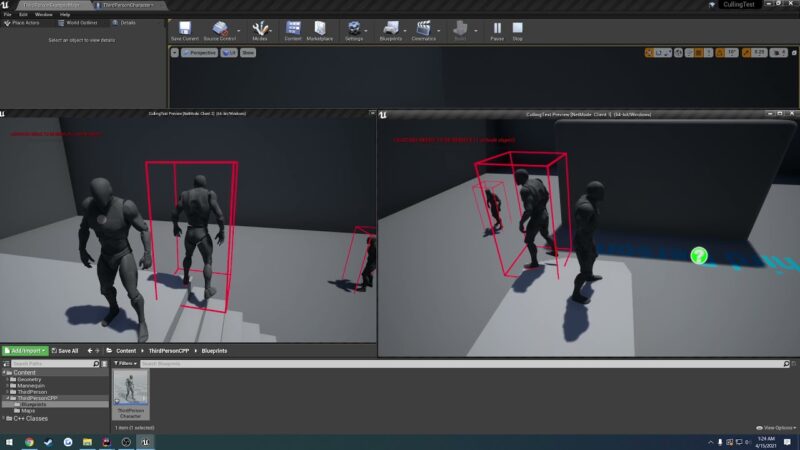
When code signatures are unavailable, anti-cheat systems can examine results. A server already receives view angles, shots and timing, so models can compare an aiming sequence with patterns learned from legitimate and automated play. The XGuardian research accepted by USENIX Security 2026 uses pitch and yaw data to describe aim trajectories across several shooters. Activision has also confirmed that its Ricochet replay system applies machine learning to prioritize suspicious clips for human review.
|
Detection layer |
What it examines |
| Client protection | Known software, drivers and game tampering |
| Server analysis | Aim movement, timing and shot behavior |
| Replay review | Visible patterns across recorded fights |
No single layer covers every cheat, which is why publishers increasingly combine them. This approach also reduces reliance on one opaque detection score.
Visual traps could make the aimbot expose itself
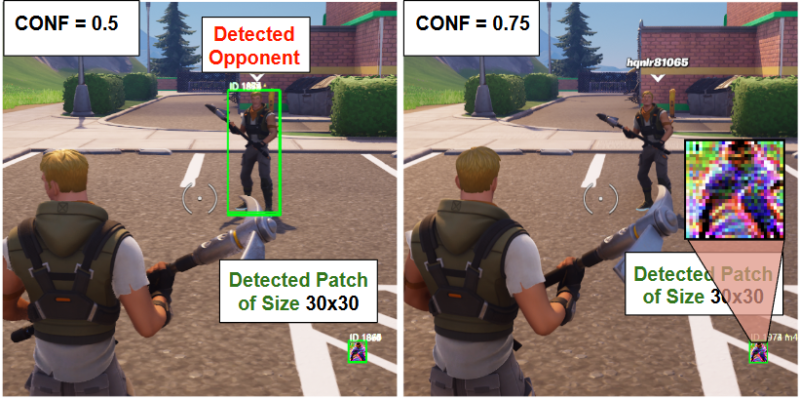
Researchers are also testing defenses aimed at the vision model rather than the cheat program. A June 2026 preprint called PATCH placed adversarial patterns inside a game to attract or confuse visual aimbots.
The authors reported detection above 90 percent in most white-box tests and 60 to 90 percent transferability with larger patches, plus a Fortnite test. Those findings are promising, but they do not show that Fortnite or another commercial shooter has deployed the method.
False positives, changing maps, accessibility devices and highly skilled human aim still complicate enforcement. That matters especially around major FPS tournaments, where a mistaken ban can carry serious consequences.
A detection score is evidence, not automatic proof. Reliable enforcement needs multiple signals, review procedures and an appeal path.
What players should expect next
The practical result is not the end of aimbots, but a broader anti-cheat system. Computer vision allows cheats to avoid some local traces; it does not erase the unnatural decisions and movement they can produce.
Players should expect more server-side analysis, delayed ban waves, replay review and security requirements alongside conventional scanning. Publishers will reveal only part of their methods because detailed disclosure helps cheat makers adapt.
For ordinary players, the useful response remains simple: avoid cheat downloads, protect game accounts, keep security features enabled when required and report suspicious behavior through the game’s own tools rather than confronting another player publicly.
Frequently asked questions
1. Can computer vision aimbots work on consoles?
In principle, external video capture and input-emulation hardware can target a console, although platform controls, latency and hardware requirements differ from PC setups.
2. Can higher mouse sensitivity trigger a false ban?
Sensitivity alone should not establish cheating. A sound detector considers sequences of movement, timing, context and other signals rather than one setting or an unusually fast turn.
3. Why do games delay bans instead of acting immediately?
Delayed enforcement can prevent cheat makers from learning exactly which action caused detection. It also gives a publisher time to review evidence and ban related accounts together.
4. Does reporting the same player several times guarantee a ban?
No. Reports may raise review priority, but enforcement should depend on gameplay evidence and the rules of the specific game, not report volume alone.