
Every family game night eventually produces the same small crisis: someone lands the last good property, someone else refuses to trade, and a nine-year-old announces, loudly, that this is not fair. Parents usually treat that moment as an interruption to the game. Developmental researchers increasingly treat it as the point of the game.
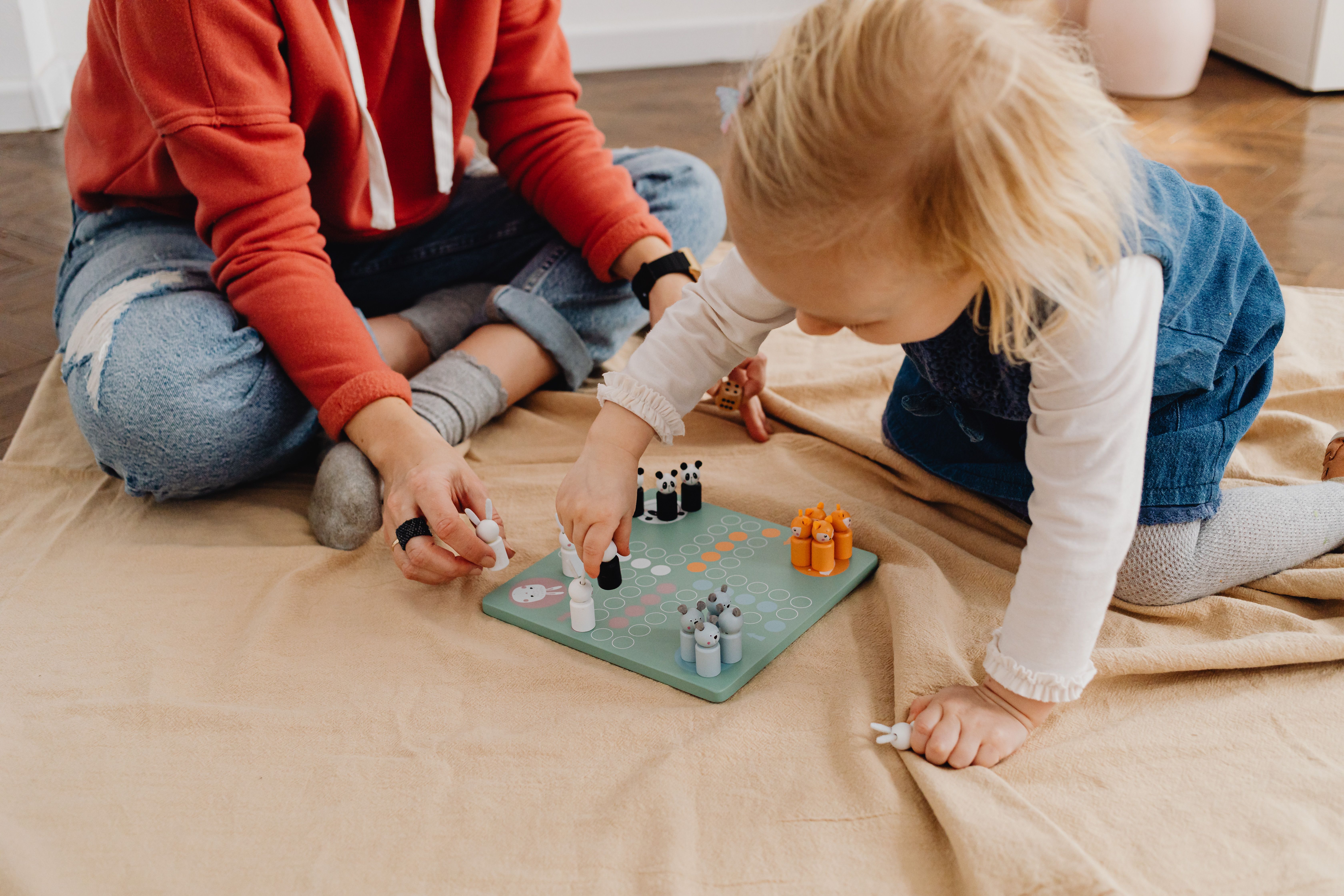
Board games put children inside miniature economies and miniature power structures, then let them feel the consequences without any real-world stakes. That combination – genuine emotional investment plus zero lasting risk – is exactly what child development researchers look for when they study how kids build a sense of fairness, ambition, and justice. It’s also, not coincidentally, why some of the most popular family games were originally designed as arguments, not entertainment.
The game that was built to make you angry
Most people assume Monopoly is simply a game about winning money. It started as the opposite: a deliberate lesson in how wealth concentration hurts everyone except the person holding the deed.
In 1904, a Washington, D.C. stenographer named Elizabeth Magie patented The Landlord’s Game, designed to illustrate the economic theories of Henry George, who argued that rents let landowners profit from land value they did nothing to create. Magie built two rulesets into her game: a “monopolist” version, where the player who accumulates the most wealth wins, and an “anti-monopolist” version, where wealth created along the way gets shared and the game ends when the poorest player catches up. She hoped children would play it, feel the unfairness in their gut, and carry that instinct into adulthood, according to the game’s history as told by Smithsonian magazine’s account of Monopoly’s origins as a protest against wealth concentration.
Parker Brothers bought her patent in 1935 for $500 and kept only the monopolist rules. The anti-monopolist half – the actual lesson – was dropped.
That history matters for anyone using games to talk with kids about ambition, because it is a real-world demonstration of how easily a lesson about greed can be flipped into a celebration of it, just by changing which half of the rules survive. If you play standard Monopoly tonight, you are playing the version its own inventor considered the cautionary tale, not the solution.
What’s actually happening in a child’s head when the rules feel unfair
This isn’t just a nice historical footnote – it maps onto decades of research on how children build moral reasoning. Jean Piaget’s early-20th-century studies of children playing marbles found that kids move from treating rules as sacred and adult-imposed toward understanding them as agreements that players construct and can renegotiate together. Later researchers built directly on that finding to argue that structured group games are one of the few contexts where children get to practice fairness with real stakes attached, because – as one widely cited analysis from Michigan State University’s early-childhood education program puts it – a game “cannot occur unless players cooperate by coordinating their points of view,” even while competing within it.
That tension between individual ambition and shared rules is precisely where moral development happens, according to this line of research: not in lectures about sharing, but in the actual friction of trying to win while staying inside rules everyone agreed to follow.
More recent evidence backs this up. A 2026 mixed-methods study of thirty preschoolers found that structured board-game discussions shifted children’s reasoning away from “because the teacher said so” toward more relational, empathetic justifications for their choices, even though the children’s formal Kohlbergian stage scores didn’t move much in a matter of weeks. In other words: the games changed how kids thought about fairness before it changed which stage a psychologist would label them at.
Cooperative games flip the incentive entirely

If Monopoly is ambition with almost no restraint built in, cooperative games sit at the other end of the spectrum. In Pandemic and Forbidden Island, both designed by Matt Leacock, every player shares one goal and either everyone wins or everyone loses together. There’s no way to “win” by being the most ruthless, because ruthlessness has nothing to purchase.
Leacock has been deliberate about not softening these games for younger audiences. “Kids will really surprise you with their resourcefulness,” he told the education blog Connected Camps, explaining why he keeps the difficulty genuinely hard even when families with young children play. The whole design depends on players needing each other’s specific abilities to succeed – a child who is “the only one who can fly anywhere” experiences a very different kind of power than a child who is buying up real estate to squeeze rent out of everyone else.
I’d push back a little on the idea that cooperative games are simply the “ethical” choice and competitive ones are the “greedy” one, though. A purely cooperative game never asks a child to grapple with the specific discomfort of having power over someone else and choosing what to do with it – and that discomfort is arguably the more useful rehearsal for adult life, where almost nobody operates in a world with zero competing interests. The honest answer is that competitive and cooperative games are teaching different halves of the same skill, and a family that only plays one type is leaving half the lesson on the shelf.
A side-by-side look at what different games actually teach
The theme a game explores and the mechanic that delivers it are two different things, and the mechanic is usually where the actual learning happens. Here’s how some widely available family games line up:
| Game | Ages | Core mechanic | What it rehearses |
|---|---|---|---|
| Monopoly (standard rules) | 8+ | Property acquisition, rent extraction | Unrestrained accumulation and its downstream effects on other players |
| Catan Junior | 6+ | Resource trading, negotiation | Getting what you need by persuading, not taking |
| Forbidden Island | 7–10+ (playable younger with help) | Shared win/loss condition, unique player roles | Interdependence – your power is only useful for the group’s goal |
| Pandemic | 8+ | Escalating shared threat, role specialization | Collective responsibility under time pressure |
| “Fair or Unfair?” scenario games (classroom/PSHE format) | 5–7 | Scenario cards, discussion prompts | Naming fairness explicitly, out loud, before deciding |
Sources: age ranges and mechanics drawn from publisher pages for Catan Junior and Forbidden Island, current as of September 2026.
Notice that only one row on that table is actually a competitive, zero-sum design. That’s not an accident of what happened to be popular enough to write about – it reflects a broader shift in family and educational game design over the past two decades, away from single-winner formats and toward shared-stakes ones, partly in response to exactly the kind of research on cooperation described above.
The conversation matters more than the cardboard

None of this works automatically. The Michigan State research on Piaget’s constructivist model is specific on this point: if an adult treats the rules as sacred and simply enforces them, children learn obedience, not fairness. The educational value shows up only when adults play as players – modeling how to lose gracefully, narrating their own strategic thinking out loud, and stepping back to let kids negotiate disputes about the rules themselves rather than settling every disagreement from above.
That means the single highest-leverage thing a parent can do during a greed-and-power-themed game isn’t picking the “right” game at all. It’s asking, mid-game, out loud: why did you decide to do that? – and then actually waiting for the answer instead of moving on. A 2025 study on prosocial game-based learning in UK primary schools found that the reflective discussion built around a game mattered as much as the mechanics of the game itself for shifting how children reasoned about their choices.
Where the line between fair and equal gets interesting

Older kids, roughly eight and up, are usually ready for a sharper distinction: fair doesn’t always mean equal. A classroom exercise built on modified Monopoly rules – used at university level to teach housing discrimination, but easily adapted downward for family discussion – starts one player with double the property and money of everyone else, then removes the advantage partway through and asks players to notice that the head start doesn’t disappear just because the rule did. It’s a blunt illustration, but it lands: giving everyone the same rules going forward isn’t the same as giving everyone the same starting line.
That’s a genuinely hard idea for a seven-year-old and a genuinely useful one for a twelve-year-old, which is a good reason to let the conversation get more complicated as kids get older rather than keeping every family game night at the same level of simplicity.
Ambition doesn’t stay on the board
The same restless drive that makes a child want to own every hotel on the board rarely disappears with age – it just moves to bigger boards. Business and career journalism regularly documents that shift in profiles of people who built organizations from scratch, in fields ranging from technology to law. A profile of a UK legal entrepreneur is one such account, tracing how personal ambition can translate, over time, into founding and growing a business. Games can’t simulate the full complexity of a real career, but the vocabulary they build early – reward versus responsibility, individual drive versus shared outcome – is the same vocabulary that story, and every story like it, eventually asks readers to use.
Putting it together for family game night

A practical rotation, rather than a single “best” game, is probably the most honest recommendation here. Alternate a competitive, accumulation-based game with a cooperative one over successive game nights, and treat the difference in how each one feels as the actual lesson plan. Ask what winning cost the other players in the competitive game. Ask what each person’s specific role contributed in the cooperative one. Neither question has a clean answer, and that’s fine – the goal isn’t a tidy moral, it’s practice noticing that ambition and fairness are usually in tension, and that noticing it is most of the work.
Frequently asked questions
What age should kids start playing games that deal with greed or power themes?
Simplified versions work from around age 5–6 with scenario-based formats like classroom “fair or unfair” card games, where an adult reads the situation and discusses it with the child. Full trading and negotiation games such as Catan Junior are generally aimed at ages 6 and up, while standard-rules Monopoly and role-based cooperative games like Pandemic are typically recommended from age 8.
Are competitive games bad for teaching ethics?
Not inherently. Piaget’s research on children’s rule-based play found that competitive games still require cooperation on a structural level – players have to agree on and enforce shared rules even while competing to win within them. The concern is less about competition itself and more about whether an adult is present to turn the friction it creates into a conversation.
Does Monopoly actually teach kids the wrong lesson about wealth?
The version most families own – the “monopolist” ruleset – was, according to the game’s documented history, only ever meant to be half of the original design. Its inventor’s “anti-monopolist” version, which redistributed wealth and ended when the poorest player caught up, was dropped by its publisher. Played on its own, the standard game can end up celebrating exactly the outcome it was originally built to criticize, which is worth explaining to kids as part of the game rather than after it.
How do cooperative games teach justice differently than competitive ones?
Cooperative games such as Forbidden Island and Pandemic remove the option to benefit at another player’s expense, since the whole group wins or loses together. That structure lets children experience interdependence and shared responsibility directly, rather than being told about it afterward.
How much should a parent step in during play to make the lesson land?
Research on constructivist early education suggests adults get the most value by playing as a participant rather than a referee – modeling strategy and gracious losing out loud, and letting children resolve rule disputes between themselves when possible, rather than settling every disagreement from above.
What’s the difference between “fair” and “equal,” and does it matter for young kids?
It matters more as children get older. Younger children generally respond well to games framed around equal turns and equal starting resources. Around age 8 and up, games or discussions that introduce unequal starting conditions – and then ask what changing the rules partway through does and doesn’t fix – tend to land better and open up more sophisticated conversations about fairness.
How this article was put together
This piece drew on the documented patent history of The Landlord’s Game and its evolution into Monopoly, publisher information for Catan Junior and Forbidden Island, a 2026 peer-reviewed mixed-methods study of preschoolers’ moral reasoning through board games, classic and applied research on Piagetian constructivist education, and a published interview with cooperative-game designer Matt Leacock. Age recommendations reflect publisher guidance current as of September 2026 and may vary by household. It does not cover digital or app-based games, which involve different design and safety considerations.